The Blue Ghost Still Stands Watch: USS Lexington's Second Career
The Essex-class carrier that Japan's propagandists kept reporting sunk now sits permanently on Corpus Christi Bay — a museum, a classroom, and the city's most recognizable silhouette after the bridge.
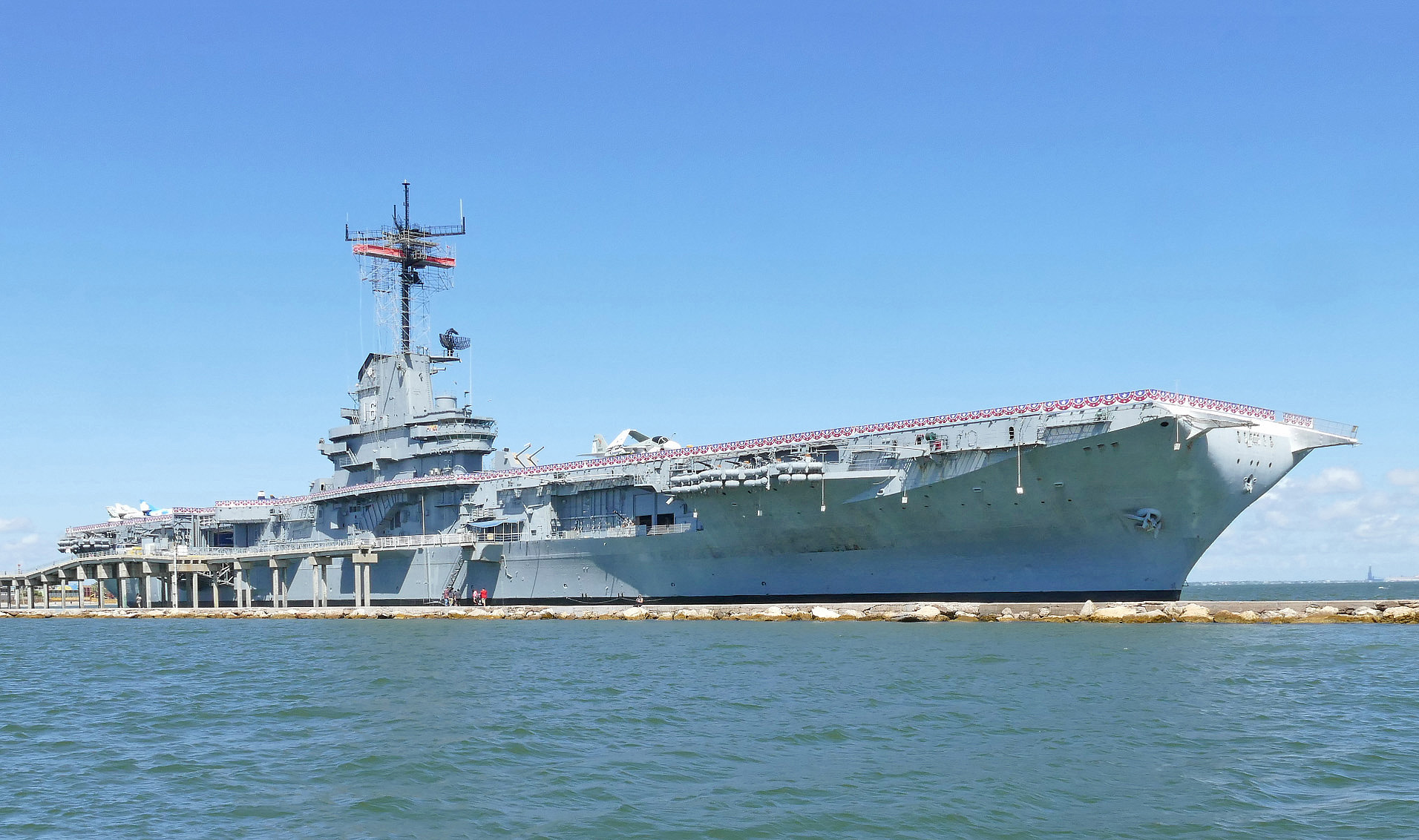
She was reported sunk so many times by Tokyo Rose that her crew nicknamed her the Blue Ghost. The USS Lexington (CV-16), an Essex-class aircraft carrier launched in 1942, earned 11 battle stars in the Pacific — and since 1992 she has been moored off North Beach as the USS Lexington Museum, Corpus Christi's floating landmark.
The museum's scale defeats a single visit: five self-guided tour routes climb through the hangar deck, flight deck, bridge and engine rooms, past a collection of vintage naval aircraft and exhibits that range from a Pearl Harbor display to a flight simulator and an escape room staged aboard a working piece of history.
Lexington spent her last decades as the Navy's training carrier, qualifying generations of naval aviators — including, in 1980, the first women to qualify as carrier pilots. Her final home was earned: Corpus Christi campaigned to keep her when the Navy retired her, and the city has maintained her as a museum ship ever since.
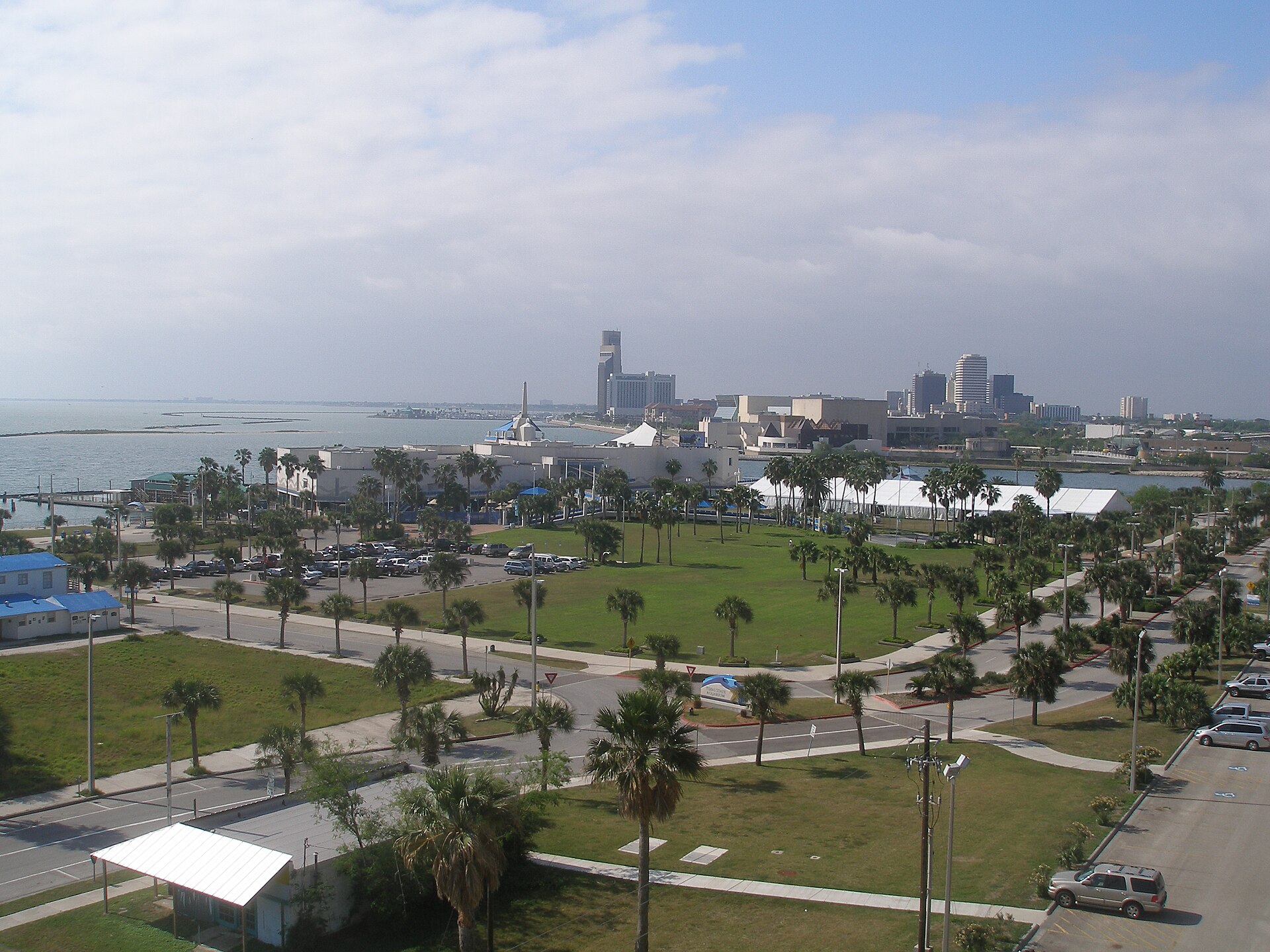
The ship anchors North Beach's visitor economy alongside the Texas State Aquarium across the ship channel, and her silhouette — 872 feet of gray steel — is the backdrop of half the photographs taken on the bayfront.
November brings the museum's cooler, quieter season: school groups on field trips, veterans' events around Veterans Day, and overnight encampment programs that let scout troops sleep in the crew berthing where sailors once did.
Museums this size run on admission revenue, volunteers and constant maintenance against salt air. The Blue Ghost's third career — after warship and schoolship — is as the region's memory, kept afloat one tour group at a time.